
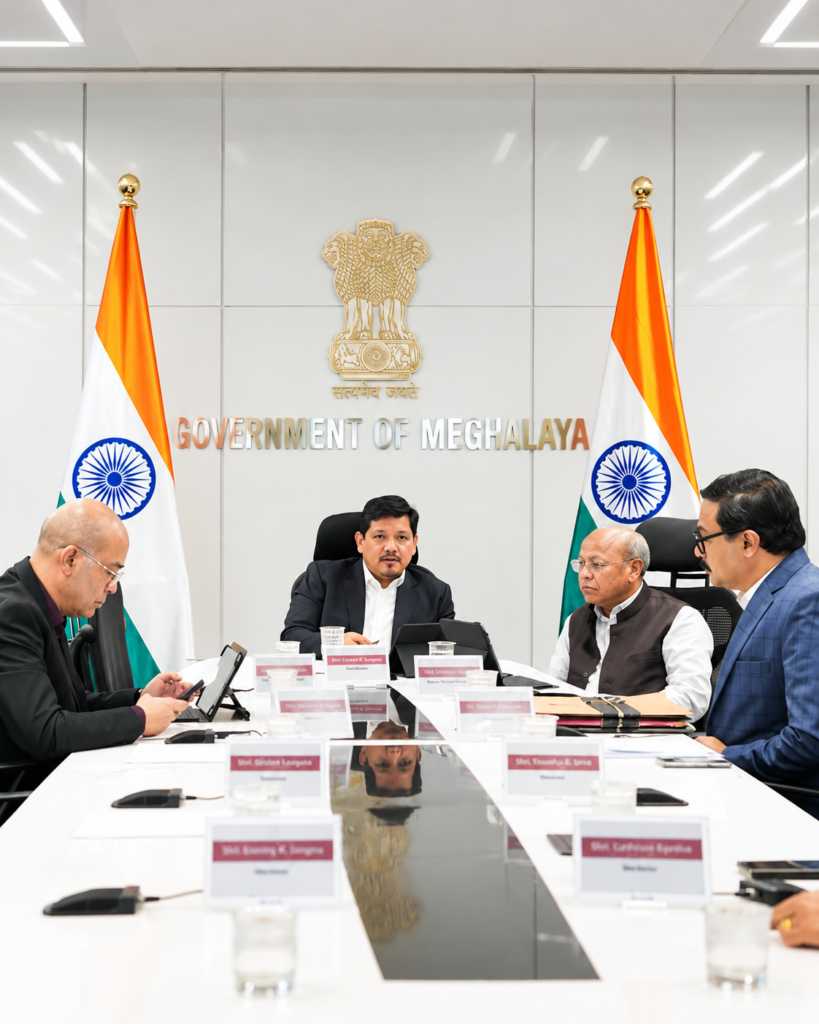

The Meghalaya Cabinet has approved the Meghalaya School Education (School Complex) Rules, 2026, introducing a voluntary nodal school framework aimed at simplifying school admissions and making the transition between different levels of education easier for students.
Chief Minister Conrad K. Sangma announced the decision following a Cabinet meeting. The initiative seeks to connect lower and upper primary schools with nearby secondary and higher secondary institutions, reducing the administrative difficulties students face when moving to higher classes.
New Framework to Ease School Transitions
Under the proposed system, schools will be linked through designated nodal institutions to facilitate smoother transitions between classes, particularly from Class 5 to Class 6 and Class 8 to Class 9.
Currently, students may have to complete fresh admission procedures multiple times during their school education. The new framework aims to reduce repeated formalities, including the need to submit transfer certificates and other admission-related documents, wherever the system applies.
The Chief Minister clarified that participation in the nodal school system will be voluntary. Schools will be able to participate if they are willing to work within the framework.
Shortage of Higher-Level Schools
The initiative comes amid a significant difference in the number of schools available at various educational levels in Meghalaya. According to figures cited by the Chief Minister, the state has 9,244 lower primary schools, 2,396 upper primary schools, 1,755 secondary schools and only 532 higher secondary schools.
This gap can make it difficult for students to secure admission as they progress through the education system, particularly in areas with limited secondary and higher secondary facilities.
Focus on Better Access to Education
The government expects the framework to strengthen coordination among schools and support the development of a wider network of nodal and model schools across blocks, subdivisions and districts.
The initiative is also intended to help identify areas where access to secondary and higher secondary education remains limited. By improving coordination between existing institutions, the state aims to make educational progression more convenient for students and their families.
The approval of the School Complex Rules, 2026, marks a step towards reducing admission-related barriers and improving access to continued schooling across Meghalaya. The system will depend on voluntary participation by schools and the implementation procedures adopted by the state government.