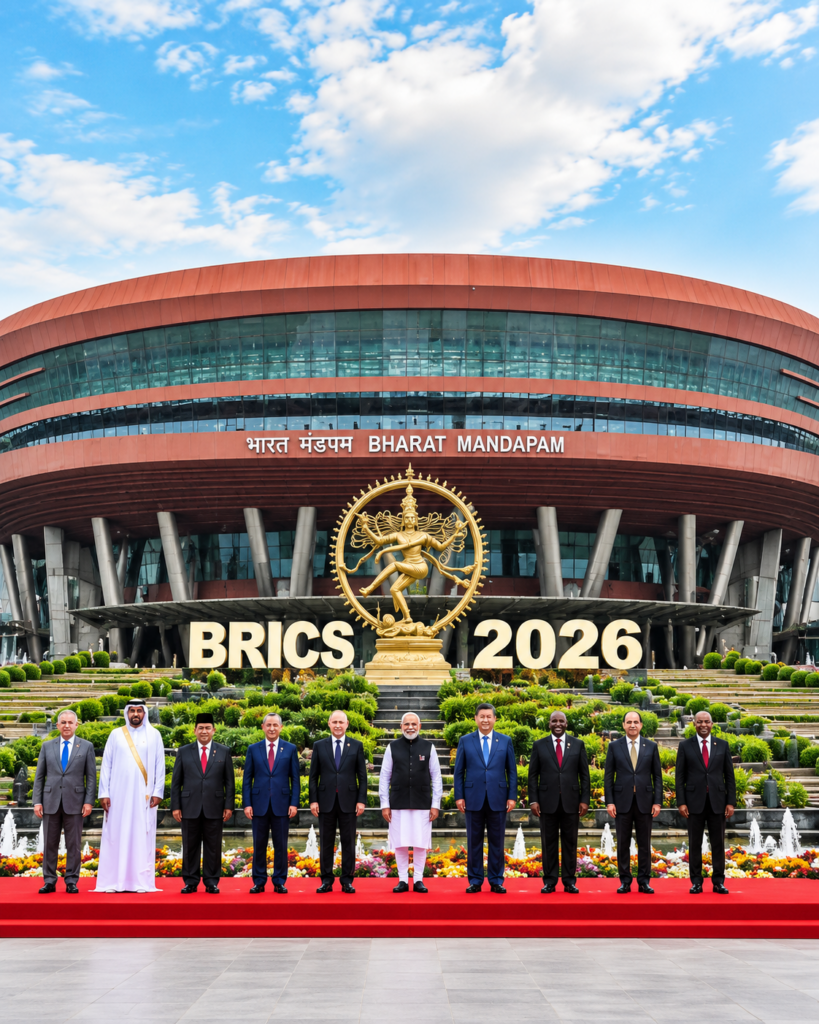

BRICS leaders have called for stronger cooperation in education, digital literacy and the safe, ethical and human-centred use of Artificial Intelligence (AI), while also backing further efforts to develop a BRICS University Global Ranking and Evaluation System. The proposals were included in the New Delhi Declaration adopted at the 18th BRICS Summit held in New Delhi on September 12–13, 2026.
The declaration emphasised the importance of sharing educational best practices among BRICS countries and promoting cooperation in Early Childhood Care and Education (ECCE), Foundational Literacy and Numeracy (FLN), digital literacy and emerging technologies. The leaders also highlighted the need for stronger institutional partnerships and greater academic and professional mobility across member countries.
Focus on AI and Emerging Technologies
A major part of the education agenda is the responsible adoption of AI and other emerging technologies. BRICS nations supported cooperation aimed at ensuring that AI use in education remains safe, ethical, inclusive and human-centred. The declaration also encouraged knowledge and experience sharing to help educational institutions and learners respond to future technological and workforce challenges.
The move comes amid growing efforts within BRICS to strengthen digital education and prepare students for rapidly changing employment needs. The declaration also stressed the importance of aligning technical and vocational education and training with evolving market demands and strengthening links between TVET institutions and industries.
Push for BRICS University Ranking
The leaders also encouraged further exploration of a BRICS University Global Ranking and Evaluation System. The proposed framework could provide a common mechanism for assessing universities within the BRICS grouping while encouraging institutions to improve academic quality, research, innovation and international cooperation.
The declaration further backed continued activities under the BRICS Network University and the BRICS Rectors’ Forum. Member countries were encouraged to expand scholarship and exchange programmes at undergraduate and postgraduate levels, particularly in Science, Technology, Engineering and Mathematics (STEM).
Traditional and Indigenous Knowledge Gets Attention
Another significant proposal was India’s initiative to strengthen academic collaboration around traditional, indigenous and local knowledge systems. BRICS leaders encouraged the BRICS Network University to consider including these areas as an additional International Thematic Group, subject to the established procedures and national policies of member countries.
Overall, the education agenda reflects a broader BRICS effort to build a more connected academic ecosystem through AI, digital skills, research collaboration, student mobility, scholarships, vocational training and knowledge exchange. The initiatives aim to equip learners and institutions across member countries to meet emerging opportunities and challenges.